
Category
Fintech & BFSI
7 notes on Fintech & BFSI.
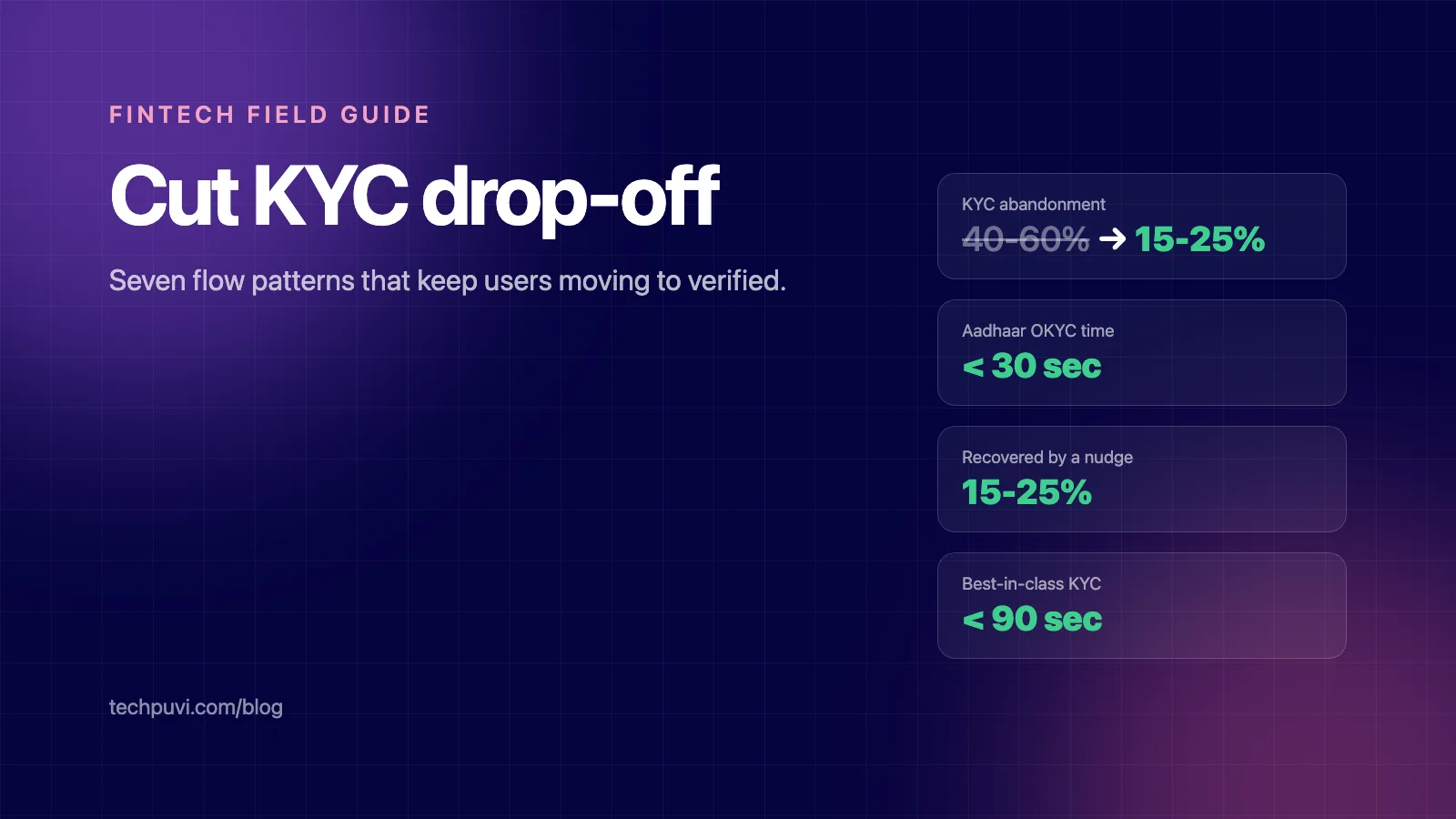
KYC Drop-off Optimization: How to Reduce Abandonment by 40%
KYC drop-off is the single largest conversion leak in Indian fintech. Seven field-tested patterns, provider advice and pitfalls for reducing abandonment by 30-40%.
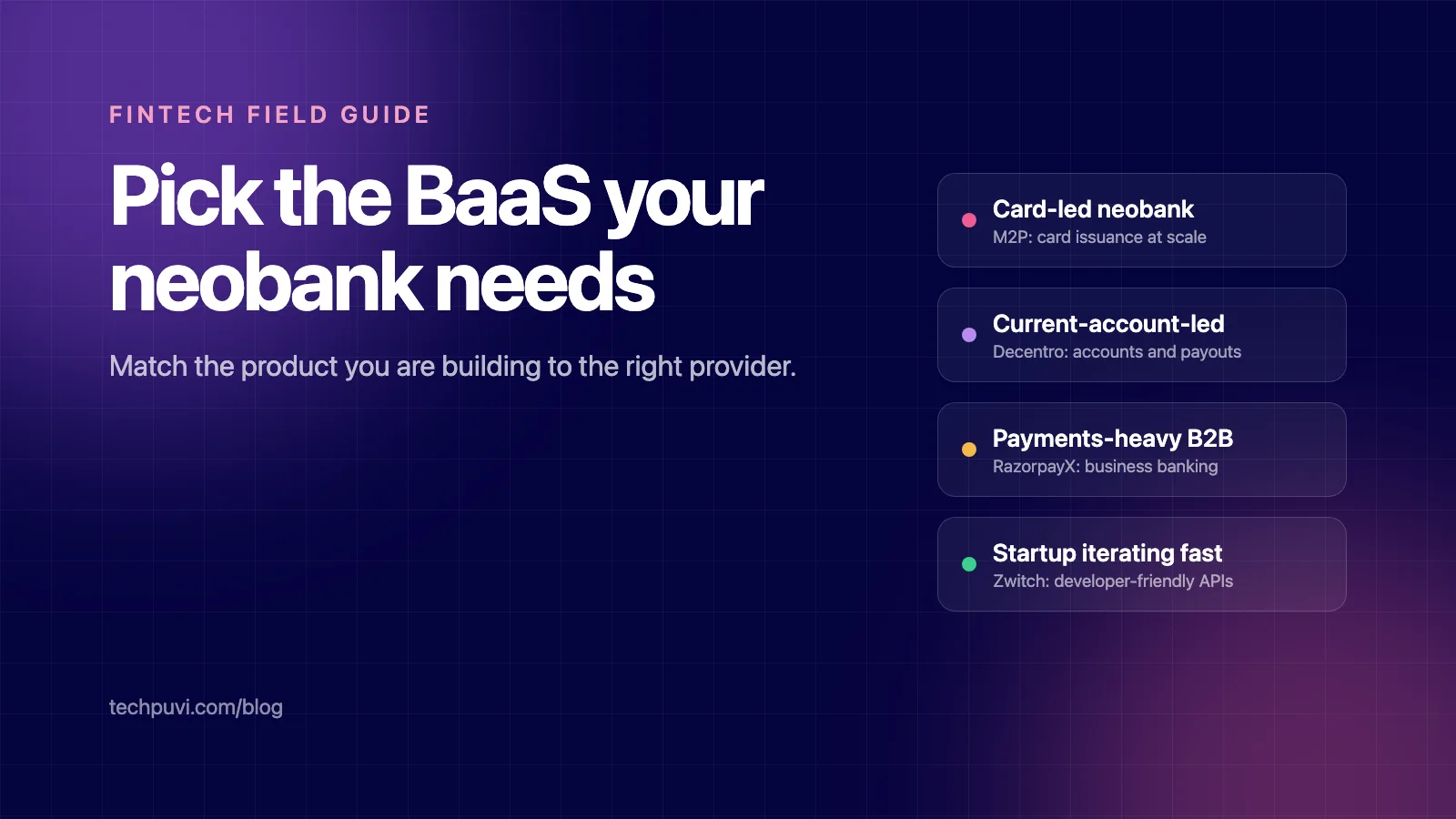
Neobanking Infrastructure in India: BaaS Providers Compared
Building a neobank in India means partnering with a regulated bank via BaaS. A clear comparison of Decentro, M2P, Zwitch, RazorpayX and Setu, what each enables, and how to choose.
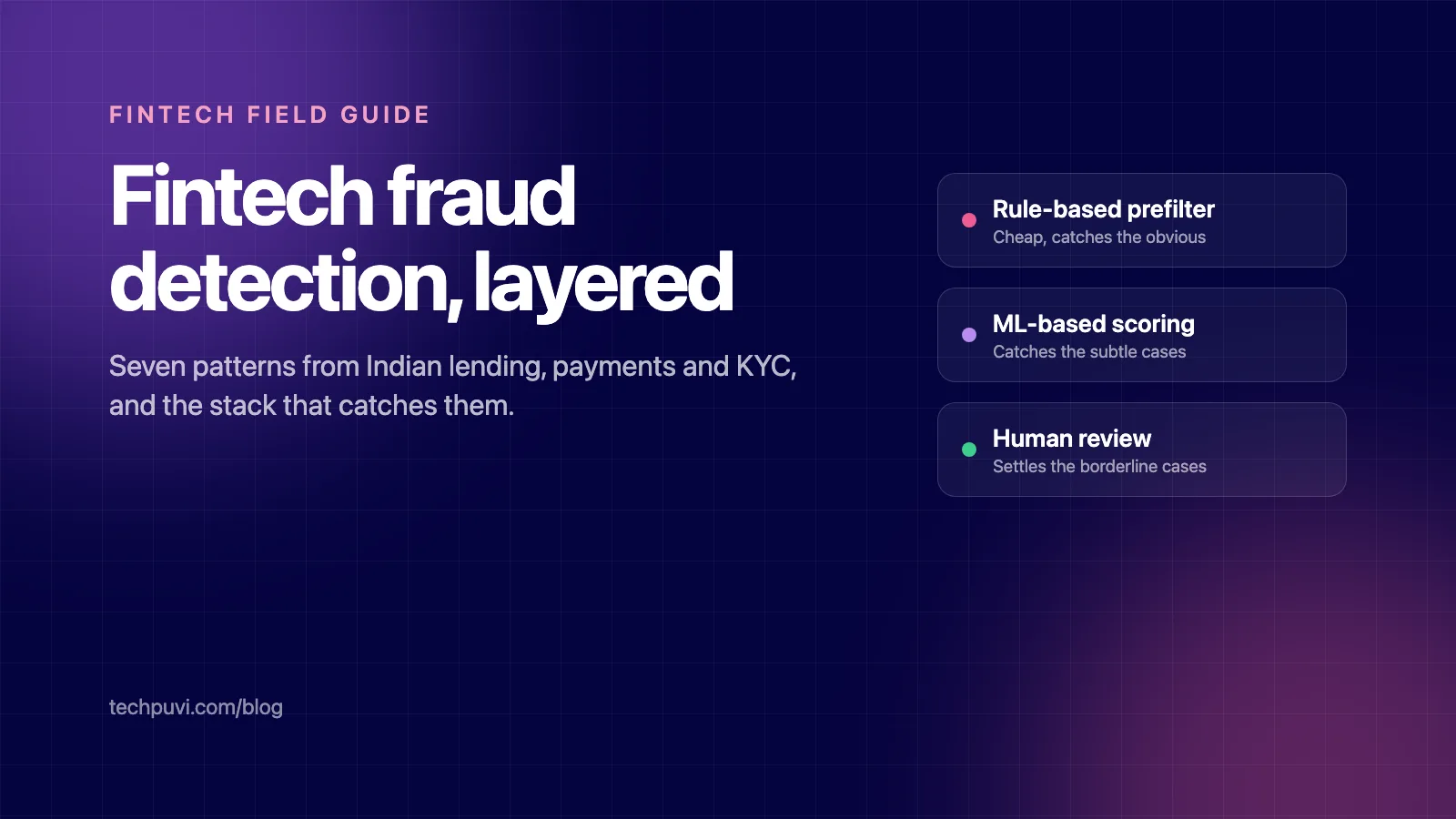
Fraud Detection Patterns in Indian Fintech: 7 We've Shipped
Seven fintech fraud patterns we have built detection for across lending, payments and KYC in India: what each looks like, the signal that catches it, and the eval rubric.
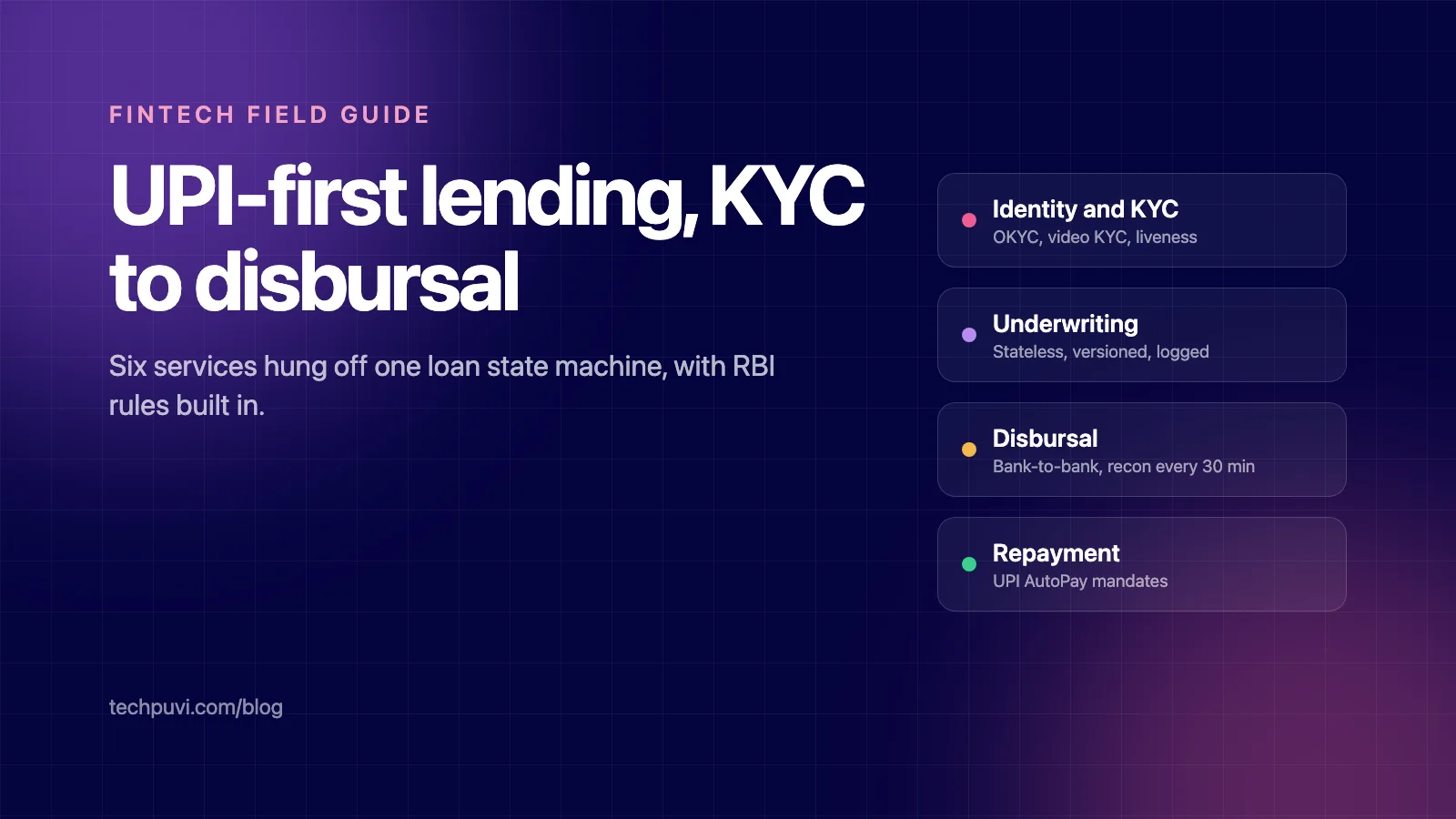
Building a UPI-First Lending App: Architecture from KYC to Disbursal
A complete architecture walkthrough for a UPI-first lending app in India: KYC, underwriting, disbursal, repayment, collections and audit, built around one loan state machine and RBI rules.
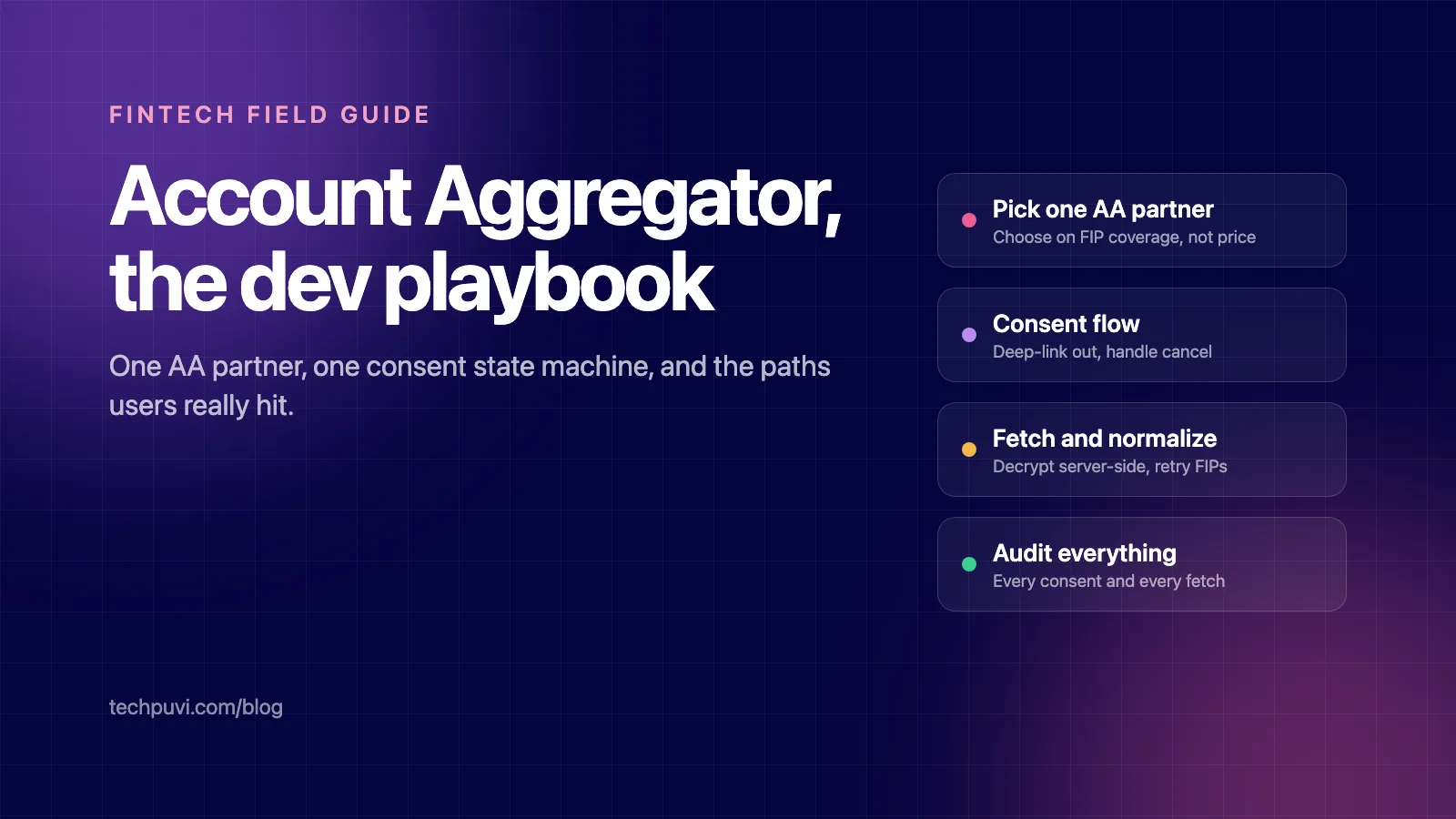
Account Aggregator Integration for Fintech: The Developer's Playbook
A developer's playbook for Account Aggregator integration in India: the protocol, FIU and FIP roles, consent UX, FIP coverage, the hard parts, and a six-week plan from sandbox to pilot.
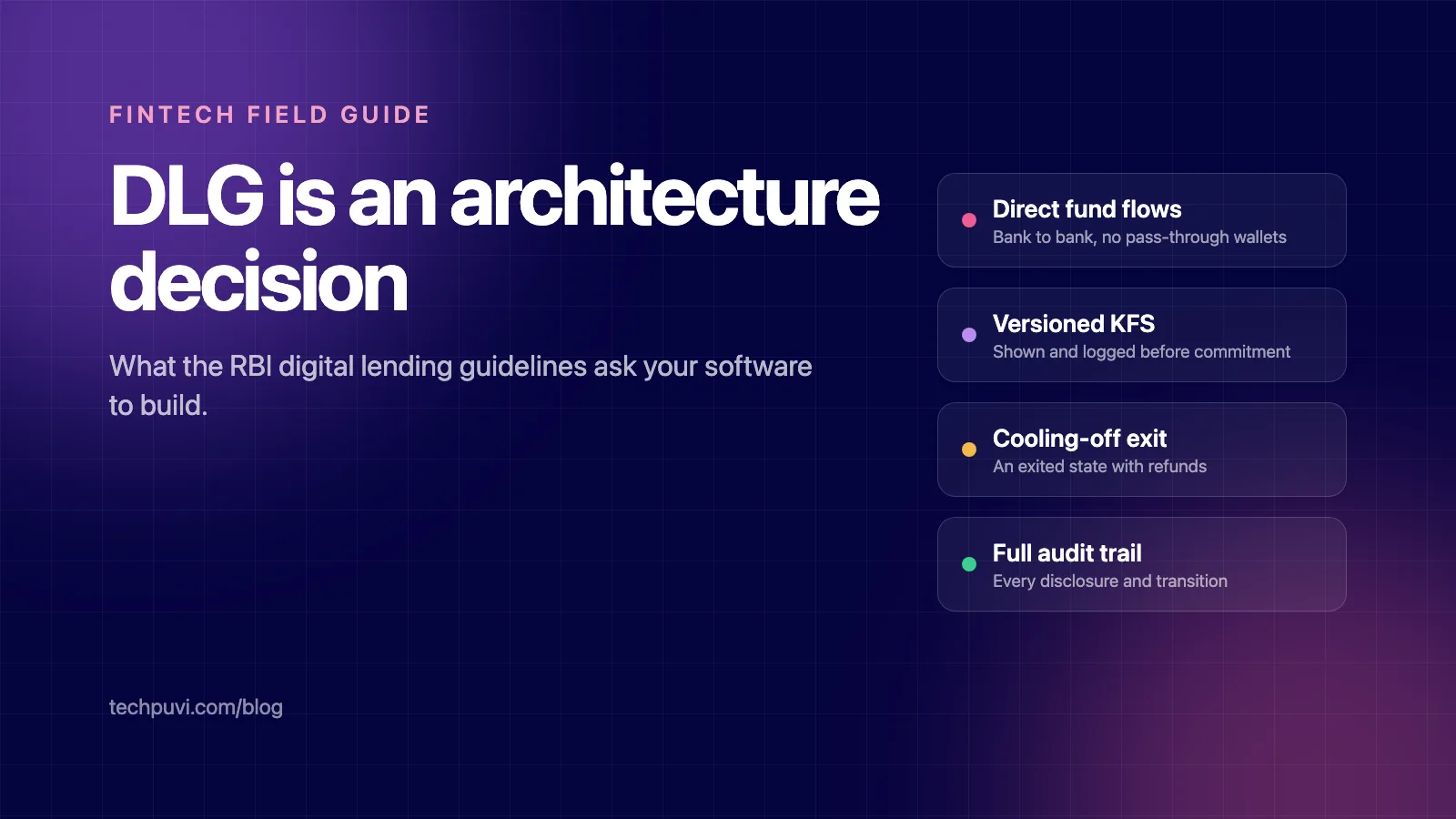
RBI Digital Lending Guidelines: What Your Software Must Comply With
The RBI digital lending guidelines are architectural requirements, not legal trivia. Here is what your lending software must implement, with concrete patterns for each rule.
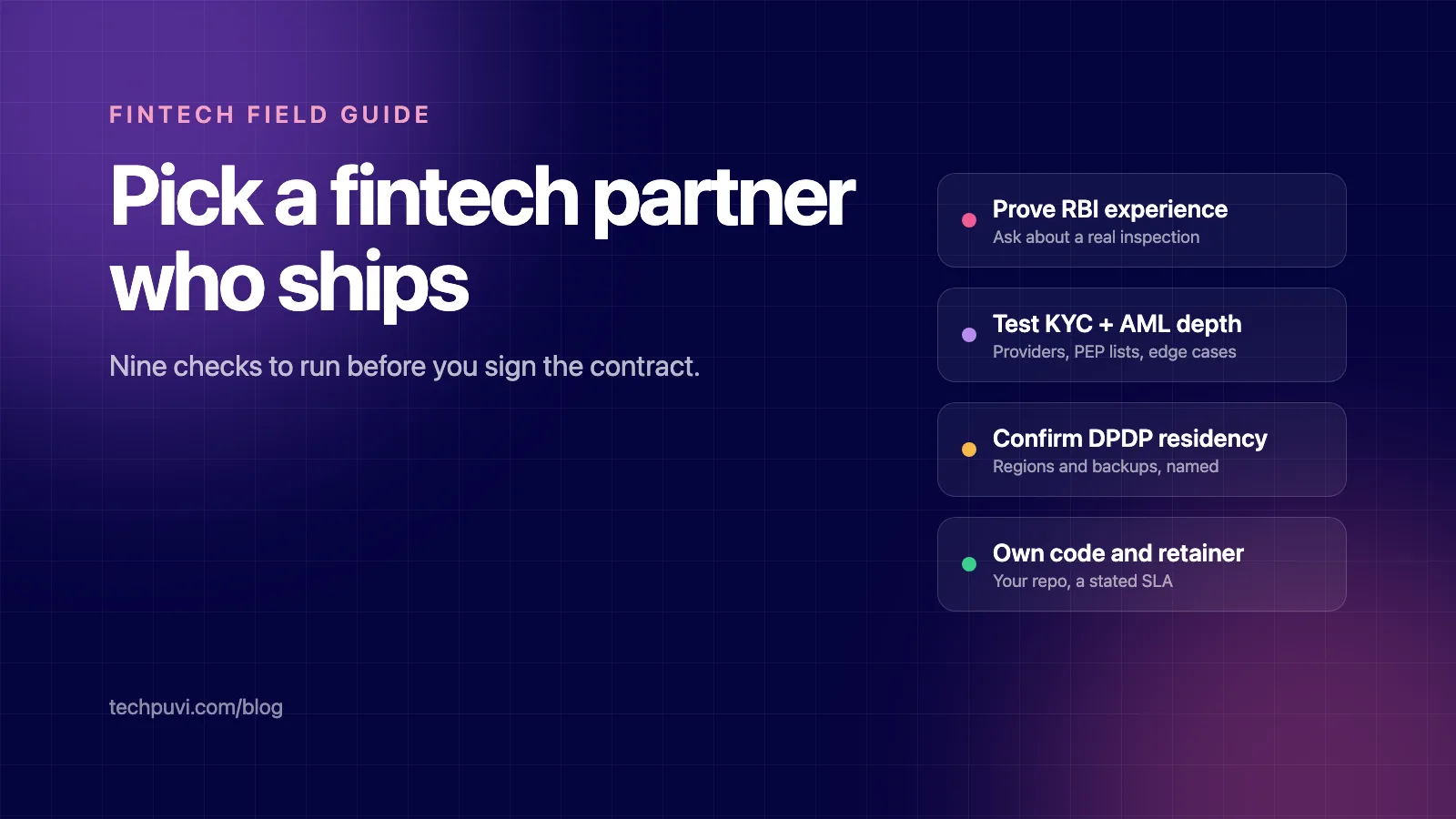
How to Choose a Fintech App Development Partner in India (2026 Guide)
A checklist for choosing a fintech app development partner in India: RBI experience, KYC and AML depth, DPDP readiness, code ownership, the retainer model, and the questions that reveal real builders.